
Cut Response Times to a Minimum with Fire Station Alerting
Communities of every size trust Phoenix G2 to help reduce emergency response times. Since it was created with both career and volunteer departments in mind, all stations can benefit.
The right units in the right places
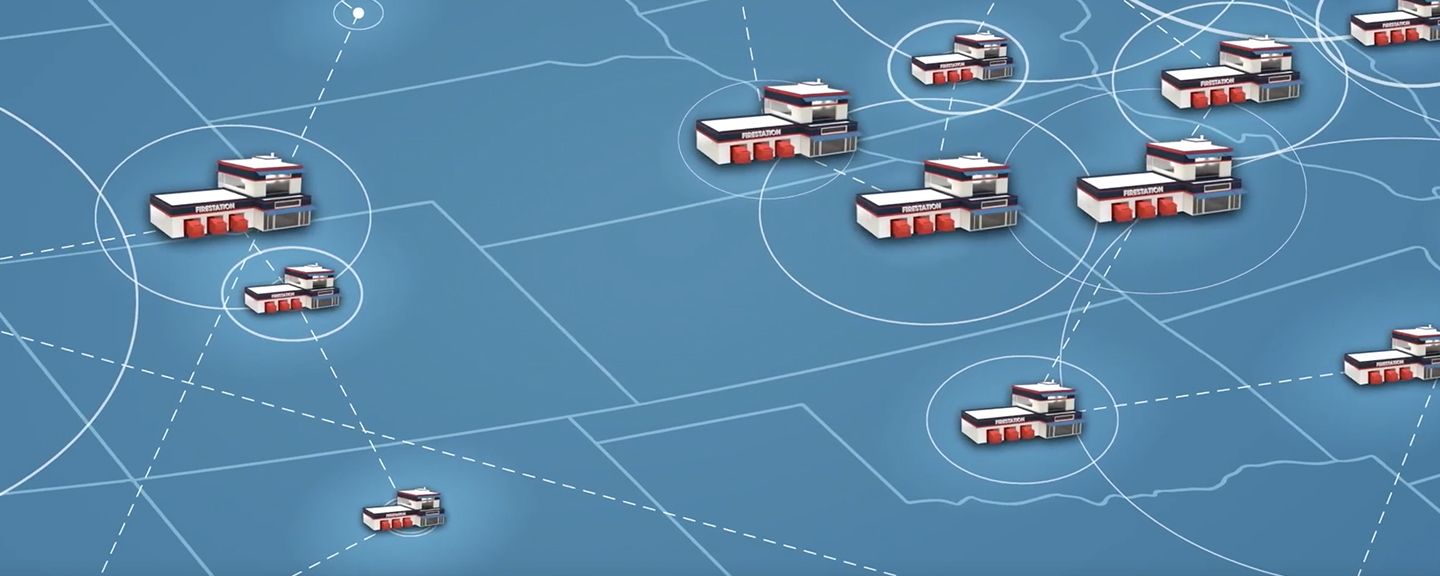
The Phoenix G2 Station Alerting System almost instantly sends alerts from dispatch to first responders, improving their response times and situational awareness.
How we help fire stations reach peak performance
Phoenix G2 integrates text-speech technology, high contrast message signs and other audio and visual peripherals to enable prompt, informed responses.
How we help dispatchers accelerate the process
Dispatch time is reduced by sending text-to-speech dispatches over a high-speed network. Multiple stations can be notified in under a second.
Our system's architecture supports dispatchers, fire stations as well as public safety administrators and personnel
Featured technology
The Dashboard allows dispatchers to easily send automated dispatching messages to any number of fire stations. The Dashboard can also monitor alerts and keep tabs on fire station alarms.
Designed for IT system administrators, this interface is a Web-based browser that helps you configure and manage fire station alerting from any location, at any time.
With this app, firefighters and first responders can receive instant verbal, written and location fire station alerts, whether they are in the fire station or somewhere on the road.
This controller processes a dispatch alert at the fire station, then sends an “acknowledgment” back to the Phoenix G2 Communications Gateway at the dispatch center. ATX alerts any combination of room zones and can be updated remotely and privately with our encrypted Web interface.
frequently asked questions
Mainly career, but volunteer departments benefit from the Phoenix G2 App for alerts along with the systems ability to alert over radio to volunteer first responders.
<1 second
The Phoenix G2 system uses TCP/IP as a primary alerting method for fastest alerting. TCP/IP is also used for communicating alerts out to the app and the Flex Alert devices. Radio is also used asynchronously and as a backup. Other methods include SIP and PA systems throughout the station. In the event of a CAD failure the dispatch is able to use Manual Alerting application to send alerts out via IP and radio to the stations directly without CAD.
USDD Voice Alert uses a system generated audio file for each dispatch.
USDD offers a variety of dashboards for dispatch and station level users.
